The automotive industry requires components that combine precision, durability, consistency, design flexibility, and efficient production. As vehicle designs become increasingly sophisticated and manufacturers focus on weight reduction, efficiency, comfort, and functionality, plastic components continue to play an important role in modern automotive manufacturing.
Automotive plastic injection molding is one of the key manufacturing methods used to produce these components efficiently and consistently. From interior trim and exterior components to lighting and mirror applications, injection-molded plastic parts can be found throughout modern vehicles.
However, producing a reliable automotive plastic component involves much more than injecting molten material into a mold. The complete process requires careful evaluation of product requirements, engineering, tooling, material selection, process planning, production, quality control, and assembly.
In this article, we explore the automotive plastic injection molding process from initial design considerations through serial production.
What Is Automotive Plastic Injection Molding?
Plastic injection molding is a manufacturing process in which thermoplastic material is heated until it reaches a processable state and then injected into a specially designed mold under controlled conditions. After cooling and solidification, the molded component is removed and prepared for subsequent manufacturing or assembly operations.
In automotive applications, this technology enables manufacturers to produce components with complex geometries, repeatable dimensions, and different surface characteristics.
Automotive plastic injection molding can be used across a wide range of applications, including:
- Dashboard and instrument panel components
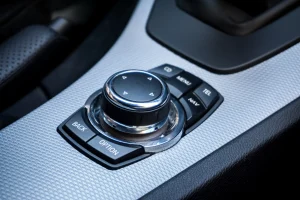
- Center console components
- Door trim parts
- Air vent components
- Headlamp housings and supporting components
- Interior and exterior mirror housings
- Grille components
- Bumper-related components
- Mounting and connection elements
- Decorative and functional plastic parts
The requirements of each component vary according to its location, function, design, material, and operating conditions. For this reason, successful production begins long before the actual injection molding process.
1. Understanding Product and Project Requirements
The first stage of an automotive plastic injection molding project is understanding the requirements of the component.
Engineering teams evaluate factors such as component geometry, dimensions, functional requirements, assembly interfaces, surface expectations, operating environment, production volumes, and customer-specific requirements.
A component installed inside the vehicle cabin, for example, may have different visual and functional expectations than a structural or supporting component located on the vehicle exterior.
Understanding these requirements at the beginning of a project helps establish a clear foundation for subsequent engineering and manufacturing decisions.
Early evaluation is particularly important in automotive projects because component design can directly affect tooling complexity, cycle time, assembly processes, quality controls, and ultimately overall manufacturing efficiency.
2. Design and Manufacturability Evaluation
A product design must not only perform its intended function; it must also be suitable for reliable and repeatable manufacturing.
This is where Design for Manufacturability (DFM) becomes important.
During manufacturability evaluation, engineers can review elements such as wall thickness, draft angles, ribs, bosses, undercuts, parting lines, dimensional requirements, and potential deformation risks.
The objective is to identify potential manufacturing challenges before tooling and serial production begin.
Early collaboration between product development, engineering, tooling, and manufacturing teams can help reduce unnecessary revisions later in the project. It can also contribute to more efficient production and more stable component quality.
For automotive manufacturers and suppliers, this engineering-oriented approach is particularly valuable when developing components with complex geometries or demanding assembly requirements.
3. Material Selection
Selecting the appropriate material is another critical step in automotive plastic component manufacturing.
Different automotive applications may require different properties, including:
- Mechanical strength
- Impact resistance
- Dimensional stability
- Temperature resistance
- Surface appearance
- Chemical resistance
- Weight optimization
- Processability
Material selection should therefore be based on the actual functional and environmental requirements of the component.
Interior trim components, exterior body-related parts, mirror housings, and headlamp components can each have different performance expectations.
The selected material also influences mold design, processing parameters, component behavior, and production consistency. Evaluating material requirements during the engineering stage is therefore essential for creating a stable manufacturing process.
4. Mold Design and Tooling
The mold is at the heart of the injection molding process.
Once the component design and material requirements have been evaluated, tooling development begins. Mold design must consider both the geometry of the component and the characteristics of the intended manufacturing process.
Important considerations may include cavity design, material flow, cooling, ejection, gating, venting, and overall process stability.
For automotive applications, where repeatability and dimensional consistency can be particularly important, tooling quality directly influences production performance.
A well-engineered mold contributes not only to component quality but also to cycle efficiency, process stability, and the long-term sustainability of serial production.
5. Process Development and Trial Production
Before moving into serial production, trial manufacturing provides an opportunity to evaluate the interaction between the mold, material, machine parameters, and component design.
During this stage, manufacturing teams can assess the molded component and optimize relevant process parameters.
Potential issues such as incomplete filling, sink marks, warpage, visible flow characteristics, dimensional deviations, or surface imperfections can be evaluated and addressed.
Trial production also provides valuable information for defining a stable production window.
Rather than focusing solely on producing an acceptable first component, the objective is to develop a process capable of delivering consistent results throughout repeated production cycles.
This repeatability is particularly important in automotive manufacturing, where components may need to be produced consistently over extended project periods.
6. Serial Plastic Injection Molding Production
Once tooling, process parameters, and component requirements have been validated, serial production can begin.
During production, parameters such as temperature, injection pressure, cooling conditions, cycle time, and machine settings must be managed consistently.
Process control plays an important role at this stage.
Stable manufacturing conditions help reduce variation between production cycles and support consistent component quality. Depending on project requirements, production data and quality results can also be monitored to identify opportunities for further improvement.
Efficient serial production therefore requires a combination of suitable equipment, process knowledge, trained personnel, tooling performance, and disciplined quality management.
7. Quality Control Throughout Production
Quality should not be treated only as a final inspection activity.
In automotive plastic injection molding, quality control can be integrated throughout the manufacturing process, beginning with incoming materials and continuing through production, inspection, assembly, and final verification.
Depending on component and customer requirements, controls may evaluate:
- Dimensions and tolerances
- Visual appearance
- Surface quality
- Component geometry
- Assembly compatibility
- Functional characteristics
- Production consistency
A prevention-oriented approach can help identify potential deviations before they become larger production issues.
Continuous monitoring and analysis also support the improvement of both product quality and manufacturing efficiency over time.
8. Assembly and Component Integration
Many automotive plastic components do not reach the customer as individual molded parts.
Depending on the application, components may require assembly with other plastic, mechanical, decorative, or functional elements.
This makes assembly compatibility an important consideration from the earliest stages of component development.
Headlamp systems, exterior mirrors, interior mirrors, dashboards, center consoles, and other automotive applications can contain multiple interacting components.
Considering interfaces, mounting points, tolerances, and assembly sequences during engineering can contribute to a more efficient downstream process.
An integrated manufacturing approach that considers both molding and assembly can therefore provide important advantages for automotive projects.
9. Continuous Improvement in Automotive Manufacturing
Serial production is not necessarily the end of process development.
Automotive manufacturing requires continuous attention to quality, productivity, cost efficiency, resource use, and process reliability.
Production data, quality results, customer feedback, and operational observations can provide valuable opportunities for improvement.
Continuous improvement activities may focus on reducing process variation, optimizing cycle times, improving material utilization, preventing defects, or enhancing production efficiency.
This approach helps manufacturers adapt to changing customer expectations and supports long-term production performance.
Why Automotive Plastic Injection Molding Matters
Plastic injection molding provides automotive manufacturers with an effective way to combine design flexibility, complex geometries, repeatability, and scalable manufacturing.
Modern vehicles contain a wide range of plastic components, from visible cabin elements to functional exterior parts. As vehicle architectures continue to evolve, manufacturing methods must also respond to new requirements for performance, efficiency, design, and integration.
The success of an automotive injection molding project therefore depends on more than production capacity alone. Engineering expertise, tooling, material knowledge, process control, quality management, and effective communication all contribute to the final result.
From Engineering to Reliable Production
At Promsonn, we approach automotive plastic component manufacturing as an integrated process that extends from understanding project requirements to engineering, tooling, plastic injection molding, quality control, assembly, and continuous improvement.
Operating in Bursa Organized Industrial Zone, we combine our manufacturing capabilities with an engineering-oriented and quality-driven approach to support different automotive applications and vehicle segments.
Our focus is on developing reliable manufacturing solutions that respond to project-specific requirements while building long-term partnerships with automotive manufacturers and supply-chain partners.
For automotive projects requiring plastic injection-molded components, effective collaboration between engineering and manufacturing is the foundation of consistent production, reliable quality, and long-term value.