Modern vehicles contain hundreds of components designed to work together to provide performance, safety, comfort, functionality, and visual quality. Among these, automotive interior and exterior plastic components have become an essential part of vehicle design and manufacturing.
From dashboards, center consoles, door trims, and ventilation components inside the cabin to grilles, bumper-related parts, mirror housings, and exterior trim components outside the vehicle, engineered plastics offer manufacturers significant flexibility.
The increasing use of plastic components in the automotive industry is not simply a design trend. Plastic injection molding enables complex geometries, functional integration, consistent serial production, surface flexibility, and potential weight optimization. However, interior and exterior components face very different requirements, making material selection, engineering, tooling, manufacturing, and quality control critical throughout the production process.
In this article, we explore the applications of automotive interior and exterior plastic components, their manufacturing processes, and the factors that contribute to reliable automotive production.
What Are Automotive Plastic Components?
Automotive plastic components are engineered parts used throughout a vehicle for functional, structural, protective, decorative, or integration purposes.
Depending on their application, these components may need to provide dimensional stability, visual quality, mechanical performance, assembly compatibility, resistance to environmental conditions, or a combination of several characteristics.
Plastic components can generally be divided into two major application groups:
- Automotive Interior Components
- Automotive Exterior Components
Although both groups can be manufactured using plastic injection molding, their design priorities and operating environments differ significantly.
Interior components directly influence cabin design, comfort, ergonomics, and perceived quality. Exterior components must integrate with vehicle architecture while operating under more demanding environmental and road conditions.
Understanding these differences is essential when developing reliable automotive plastic components.
Automotive Interior Plastic Components
Vehicle interiors have evolved significantly in recent years. Modern cabins are expected to combine functionality with comfort, visual consistency, ergonomics, and increasingly sophisticated design concepts.
Plastic injection molding allows manufacturers to produce complex interior geometries while integrating functional and decorative features into individual components.
Common automotive interior plastic applications include:
- Dashboard and instrument panel components
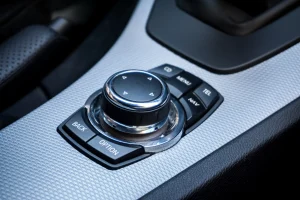
- Center console components
- Door trim parts
- Interior door handle components
- Air vents and ventilation components
- Storage compartments
- Control panel surrounds
- Decorative trim elements
- Interior mirror housings
- Functional cabin plastic components
Each application requires careful consideration of its interaction with passengers, surrounding components, and the overall cabin architecture.
Why Interior Component Quality Matters
Automotive interior components are among the vehicle elements that drivers and passengers see, touch, and interact with most frequently.
This means that quality is perceived not only through functional performance but also through appearance, fit, surface characteristics, and consistency between neighboring components.
For example, a center console component must fit correctly with surrounding trim while supporting controls, storage areas, and other functional elements. A dashboard component may need to maintain visual consistency across a relatively large surface while integrating with multiple neighboring systems.
Even small dimensional or visual differences can become noticeable when components are positioned next to each other.
For this reason, interior plastic component manufacturing requires close attention to tooling, material behavior, process stability, dimensional control, and surface quality.
Automotive Exterior Plastic Components
Exterior components operate in a different environment.
While design remains important, exterior plastic components may also need to support mounting, protection, connection, airflow management, or integration with other vehicle systems.
Common exterior applications include:
- Grille components
- Bumper brackets and supporting parts
- Exterior mirror housings
- Exterior covers
- Wheel arch components
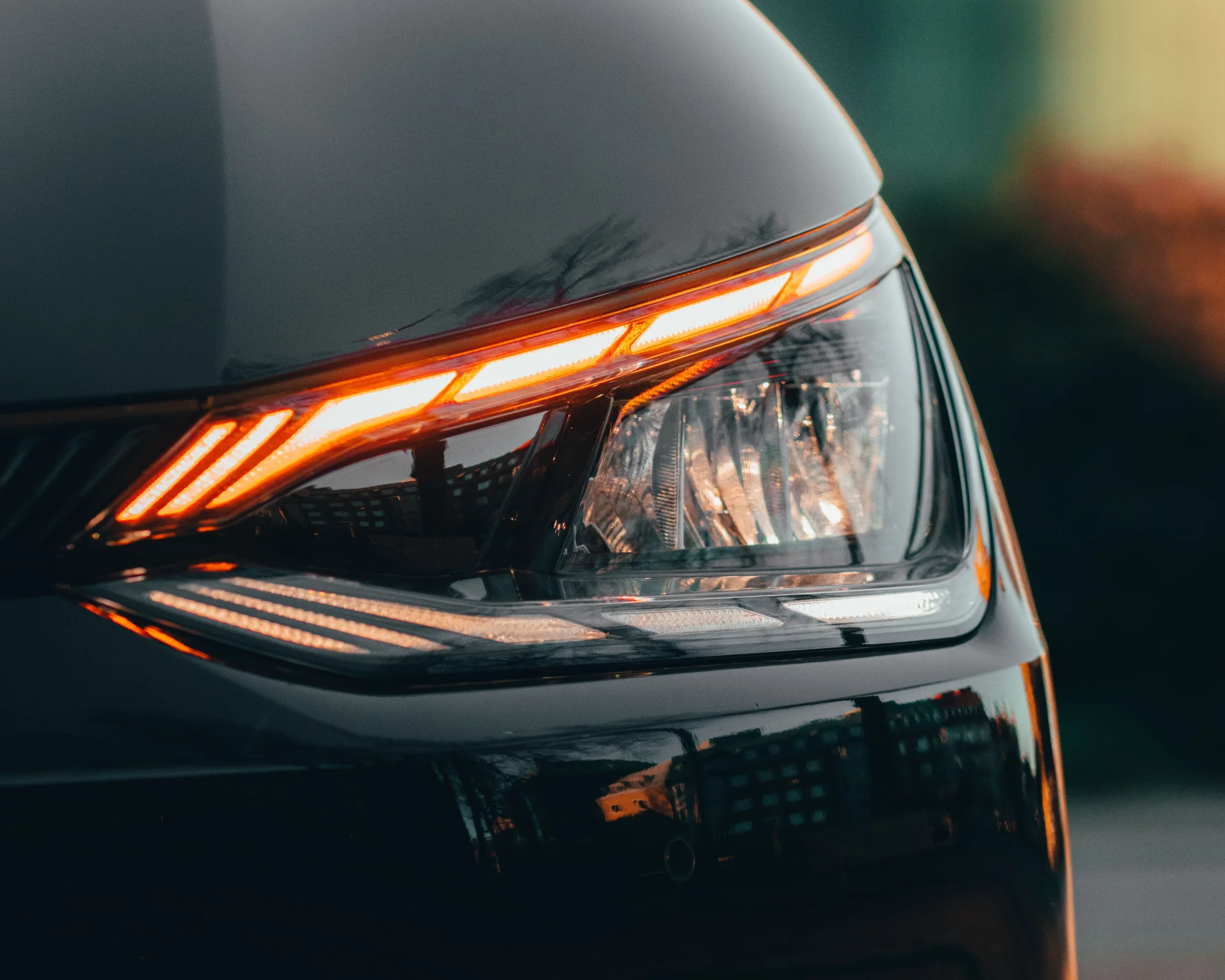
- Lighting surrounds
- Mounting and retaining components
- Clips and connection elements
- Underbody plastic parts
- Vehicle-specific exterior trim components
Depending on their location, exterior components can be exposed to changing temperatures, moisture, road conditions, vibration, sunlight, and other environmental factors.
These conditions must be considered during engineering and material selection.
Design Integration in Exterior Components
Exterior components contribute significantly to the visual identity of a vehicle.
Grilles, mirror housings, bumper-related parts, and trim components often form part of the visible exterior design. At the same time, they must integrate correctly with surrounding body structures and functional systems.
Component geometry, mounting interfaces, tolerances, connection points, and surface characteristics therefore become important design considerations.
An exterior component cannot be evaluated independently from the surrounding vehicle architecture.
Effective engineering considers how the component will be manufactured, installed, connected, and used throughout its lifecycle.
This system-oriented approach helps support reliable integration during vehicle assembly.
Plastic Injection Molding for Automotive Components
Plastic injection molding is one of the most widely used manufacturing methods for automotive interior and exterior components.
The process begins by heating thermoplastic material until it reaches the required processing condition. The material is then injected into a mold cavity under controlled parameters.
After cooling and solidification, the molded component is removed and prepared for inspection, secondary operations, or assembly.
The process is particularly valuable for automotive applications because it can support:
- Complex component geometries
- Repeatable serial production
- Integrated functional features
- Consistent dimensions
- Different surface requirements
- Scalable manufacturing volumes
- Efficient production cycles
However, achieving these benefits requires careful engineering before serial production begins.
From Component Design to Manufacturability
A successful automotive plastic component must be designed with manufacturing in mind.
During the engineering phase, component geometry is evaluated to determine whether the design can be produced reliably using the intended injection molding process.
This Design for Manufacturability (DFM) approach may include evaluating wall thicknesses, draft angles, ribs, bosses, undercuts, parting lines, mounting features, and potential deformation areas.
Interior components may require particular attention to visible surfaces and interaction with neighboring cabin parts.
Exterior components may require additional consideration of structural features, mounting interfaces, environmental exposure, and vehicle body integration.
Identifying potential manufacturing challenges during the design phase can reduce unnecessary modifications later in the project and contribute to a more stable production process.
Material Selection for Interior and Exterior Applications
Material selection is another important part of automotive plastic component development.
There is no single plastic material suitable for every vehicle application.
The appropriate material depends on factors such as:
- Mechanical requirements
- Temperature conditions
- Impact expectations
- Dimensional stability
- Chemical exposure
- Surface requirements
- Environmental conditions
- Component weight
- Manufacturing process
Interior and exterior components can therefore require different material properties even when their geometries appear similar.
Material behavior must also be considered during tooling and process development because shrinkage, flow characteristics, cooling behavior, and dimensional stability can influence final component quality.
Selecting the material based on the actual application rather than general assumptions is essential for reliable production.
Tooling and Process Development
Once component design and material requirements are established, mold development becomes a critical stage.
The mold determines the geometry of the component while also influencing material flow, cooling, ejection, surface quality, and cycle performance.
Before serial manufacturing, trial production is typically used to evaluate how the mold, material, machine, and process parameters work together.
Manufacturing teams can use these trials to identify potential issues and optimize the process.
The objective is not simply to produce an acceptable sample. A successful automotive production process must provide repeatable results over many manufacturing cycles.
This makes process stability particularly important for automotive programs involving ongoing serial production.
Quality Control in Automotive Plastic Component Manufacturing
Quality control should be integrated throughout production rather than treated only as a final inspection.
Depending on the component and customer requirements, automotive plastic parts may be evaluated for:
- Dimensional consistency
- Surface appearance
- Geometry
- Fit and assembly compatibility
- Functional characteristics
- Visible defects
- Process consistency
For interior components, visual quality and fit with surrounding cabin parts can be particularly important.
For exterior components, dimensional accuracy, mounting compatibility, surface consistency, and functional integration may receive greater attention depending on the application.
A prevention-oriented quality approach helps identify potential deviations early and supports continuous process improvement.
Assembly and Component Integration
Many injection-molded automotive parts are not delivered as isolated components.
They may need to be combined with other plastic parts, fasteners, mechanical elements, decorative components, or functional systems.
For this reason, assembly requirements should be considered during product and process development.
Mounting points, clips, interfaces, tolerances, and assembly sequences can all influence production efficiency and final product quality.
This is especially relevant for products such as mirror systems, interior trim assemblies, lighting components, and multi-part exterior structures.
Manufacturing suppliers with both injection molding and assembly capabilities can support a more integrated approach to automotive component production.
Supporting Different Vehicle Segments
Modern automotive production includes a wide range of vehicle architectures and market segments.
Interior and exterior components may differ significantly between compact passenger cars, premium models, commercial vehicles, electric vehicles, and other vehicle platforms.
A flexible manufacturing approach allows component producers to respond to these different requirements.
This may involve project-specific tooling, different materials, varying surface expectations, unique assembly requirements, or different production volumes.
Rather than applying the same solution to every project, automotive component manufacturing benefits from evaluating each application according to its technical and commercial requirements.
Continuous Improvement in Plastic Component Manufacturing
Automotive manufacturing does not stop improving once serial production begins.
Production performance can be continuously evaluated through process data, quality results, operational observations, and customer feedback.
Improvement activities may focus on:
- Reducing production variation
- Improving cycle efficiency
- Preventing defects
- Optimizing material utilization
- Improving assembly operations
- Increasing process stability
- Supporting more efficient resource use
Continuous improvement helps manufacturers maintain consistent quality while adapting to changing customer expectations and production conditions.
It also supports more responsible manufacturing by identifying opportunities to reduce unnecessary material, energy, and operational losses.
Interior and Exterior Plastics in the Future of Automotive Manufacturing
Vehicle architecture continues to evolve.
Electric mobility, digital cabin technologies, new lighting concepts, advanced user interfaces, and changing exterior designs are creating new requirements for automotive components.
Interior parts increasingly need to support integrated controls, refined surfaces, new cabin layouts, and improved user experiences.
Exterior components must respond to evolving vehicle styling, aerodynamic considerations, lighting technologies, sensor integration, and changing platform architectures.
Plastic injection molding provides the design and manufacturing flexibility required to respond to many of these developments.
As automotive technology evolves, the relationship between component design, materials, tooling, manufacturing, assembly, and quality management will become increasingly important.
From Plastic Components to Complete Manufacturing Solutions
Automotive interior and exterior plastic components may appear very different, but successful manufacturing depends on the same fundamental principles: engineering expertise, suitable material selection, reliable tooling, controlled production, quality management, and effective component integration.
At Promsonn, we combine plastic injection molding, tooling, assembly, engineering support, and a quality-driven manufacturing approach to support a range of automotive applications.
Operating in Bursa Organized Industrial Zone, we focus on developing reliable component solutions for different vehicle segments, particularly for the requirements of the European automotive industry and supply chain.
Our product capabilities include headlamp system components, exterior and interior mirror components, interior trim parts, and exterior plastic components.
From understanding initial project requirements to engineering, manufacturing, quality control, and assembly, our approach focuses on transforming automotive component requirements into reliable and repeatable production solutions.
As vehicle technologies and designs continue to evolve, well-engineered plastic components will remain an important part of automotive manufacturing — connecting design, functionality, production efficiency, and reliable performance.